Queenswood Heights to Cardinal Creek
Landscaping in Orleans, for clay soil and growing families.
Orleans grew one neighbourhood at a time, from 1950s Queenswood Heights to subdivisions still being built in Avalon and Cardinal Creek. Most of it sits on heavy clay, and most of its yards are working family spaces. Good landscaping here is built for both.
 New lawns on proper topsoil
- Neighbourhoods
- Queenswood Heights, Convent Glen, Orléans Wood, Chatelaine Village, Fallingbrook, Chapel Hill, Avalon, Notting Gate, Cardinal Creek
- Common ground
- Heavy clay, slow drainage and builder-grade topsoil in newer areas
- Popular projects
- First patios, new sod, front walkways, privacy planting and play lawns
- Before digging
- Locates, swales left open, tree permits for big trees
An east end built in waves
From a parish to a suburb
Orleans began as a French Canadian farming community, centred on the parish of Saint-Joseph d'Orléans, founded in 1860, and it has kept a strong francophone character ever since. Suburban Orleans started with Queenswood Heights in the late 1950s. In 1970 the Grey Nuns sold 500 acres to the developers Costain and Minto, which led to Convent Glen, Orléans Wood and Chatelaine Village, and the biggest boom came through the 1980s. Fallingbrook and Chapel Hill filled in through the 1980s and 1990s, and building has continued south and east ever since, through Avalon, Notting Gate and Cardinal Creek.
Why that matters in the garden
Each wave of building left a different kind of yard. The oldest neighbourhoods have mature trees, settled hardscape and gardens that have grown in for decades. The 1970s and 1980s streets have original patios and walkways reaching the end of their life. The newest areas have bare backyards with builder sod over compacted clay, a rear-yard swale and a lot of potential. Landscaping in Orleans starts with knowing which of those you have.
Working with Orleans clay
Clay is the single biggest factor in an Orleans garden.
What clay does
Much of the east end sits on the fine marine clay left behind by the Champlain Sea. Clay holds water, drains slowly and swells and shrinks as it wets and dries. In spring it stays saturated long after the snow is gone; in a dry August it bakes hard and cracks. Frost works on wet clay every winter, lifting anything built on a shallow base.
Building on it
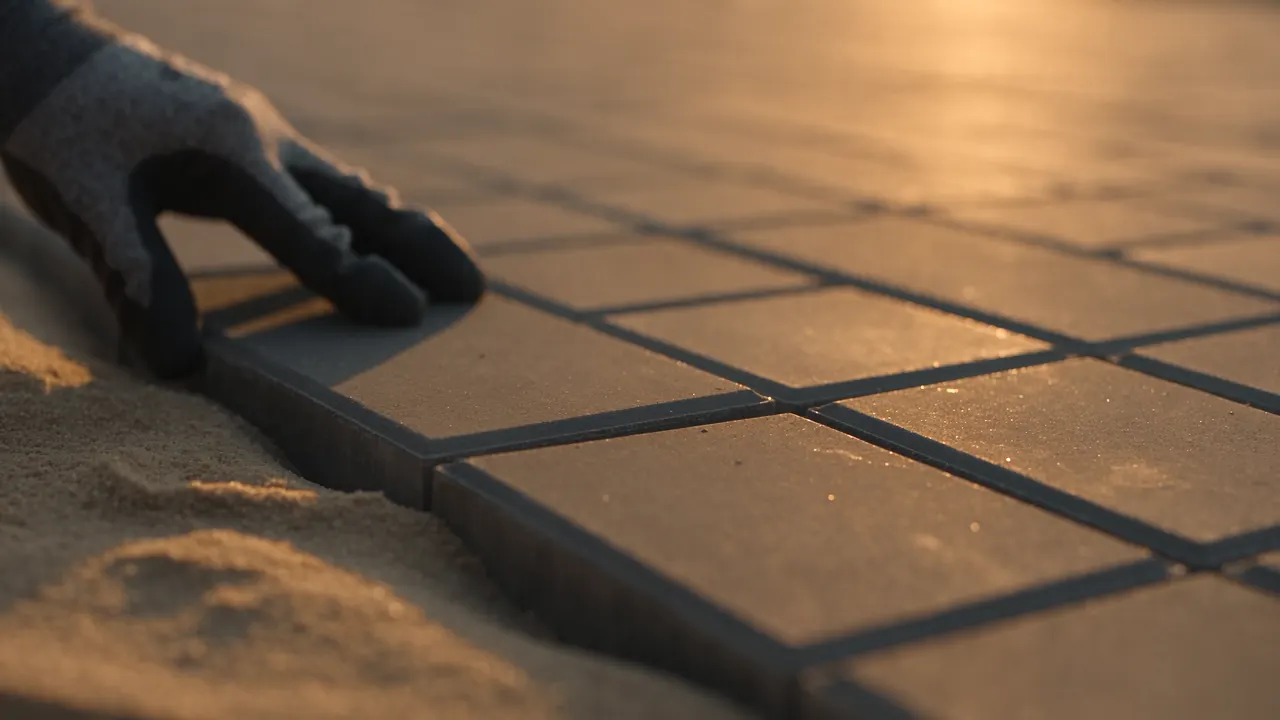
For interlock patios and walkways, clay means digging out the soft material, laying a geotextile, and building a thicker compacted granular base so the pavers sit on something that drains. For walls, it means drainage stone and a pipe behind every course. For lawns, it means loosening the subsoil and bringing in real topsoil, because sod laid straight on compacted builder clay is the most common reason a new Orleans lawn browns out in its first summer.
Planting in it
Clay is fertile; it just needs the right plants and a little help. Adding compost to planting beds improves structure over time. Many beautiful plants actually prefer heavy, moist soil: red osier dogwood, Siberian iris, New England aster, switchgrass, red maple and serviceberry among them. Plants that demand sharp drainage, such as lavender and many alpines, are better in raised beds or containers.
Orleans, neighbourhood by neighbourhood
Typical yards and typical projects, by the decade a neighbourhood was built.
The first patio behind a new house
In Orleans' newer neighbourhoods, the first backyard project usually comes a year or two after moving in, once the family has seen how they use the yard. It is the most important one, because it sets the grade, the drainage and the layout for everything that follows.
A good first patio starts at the back door at a comfortable step down, is sized for how you will really use it, and slopes gently away from the house. It stays clear of the rear-yard swale and leaves room for a play lawn, a garden bed and the trees that will one day shade it. If lighting, a gas line for a fire table or a hot tub might come later, conduit goes under the patio now.
Designed as part of a whole-yard landscape design, a first patio can be built this year with the planting, walls and lighting added in later seasons, without tearing anything up.
Lawns in Orleans
New-build lawns
Builder sod is often laid on a few centimetres of topsoil over compacted clay. It looks fine for a season, then thins, browns in summer and fills with weeds. The fix is not more fertilizer. It is aeration to break up compaction, top-dressing with compost, and overseeding in late August and September. Where a lawn is beyond saving, it is stripped, the subsoil loosened, proper topsoil added and new sod laid. The lawn care page covers the process.
Play lawns
Lawns that get soccer, tag and a trampoline need tough grass and a little planning: a blend with perennial ryegrass for wear, the trampoline moved now and then, and a mowing height that keeps the turf dense. A worn patch by the gate or the back step is often a sign that a stepping-stone path belongs there.
Privacy on new Orleans lots
Newer subdivisions put neighbours close, with fences and little else between yards.
Layers, not a wall
A row of eastern white cedar is the classic answer and works well in Orleans clay, which holds the moisture cedars like. But a single hedge type is a single point of failure. A layered screen of evergreens, tall grasses and flowering shrubs gives privacy with more interest, more wildlife and less risk if one plant struggles.
Where privacy matters most
Most of the time, privacy is only needed in a few places: around the patio, in line with a neighbour's upstairs window, beside the hot tub. Planting a screen or a pergola exactly there costs far less than screening the whole yard, and keeps the open feeling a small lot needs.
Front yards and driveways in Orleans
A better first impression
Many Orleans front yards still have a builder walkway that runs straight to the driveway and a narrow bed against the house. A wider, gently curved walk from the sidewalk, a landing at the door, and a bed that frames the entrance instead of hiding the windows give a house a much better welcome.
Driveway changes
Widening or rebuilding a driveway means two sets of rules: the Zoning By-law for the part on your lot and the City's Access By-law for the part that crosses the boulevard to the street, which limits driveways to half of the lot frontage. Some modest extensions no longer need a permit; widening at the curb usually does. Check with the City before you plan, and ask any hardscaping contractor for their City licence.
Rain gardens on east-end clay
A rain garden is a shallow, planted basin that catches water from a downspout or a paved area and lets it soak away slowly. On sandy soil they are simple. On clay they need more thought, because clay drains slowly: the basin is sized to the roof area it serves, the soil in it is improved so water can soak in, and an overflow route carries big storms safely away from the house and the neighbours.
Done well, a rain garden turns a soggy corner into one of the best planted spots in the yard, with plants such as red osier dogwood, Siberian iris, New England aster and switchgrass that are happy to have wet feet for a day and dry soil the next. Where you live in Orleans may make you eligible for a Rain Ready Ottawa rebate on a rain garden; check eligibility before the work begins, because rebates are approved in advance.
Material calculator
Rough quantities for a patio, walkway, driveway, new lawn or planting bed, so you can sanity-check a quote. Base depths shown are the industry minimums; Ottawa clay and frost often call for more, and your installer sets the final depth after seeing the soil.
Questions people ask.
Do you landscape in all of Orleans?
Yes, from Queenswood Heights and Convent Glen to Avalon, Notting Gate and Cardinal Creek, and nearby Cumberland and Navan. Call 613-851-7831 to ask about timing for your street.
Why does my Orleans lawn turn brown every summer?
Most often because it was laid on a thin layer of topsoil over compacted clay, so roots stay shallow and dry out fast. Aeration, top-dressing and fall overseeding help; a badly compacted lawn may need new topsoil and sod.
Will interlock heave on Orleans clay?
Interlock on clay can heave if the base is too thin or water gets trapped underneath. A properly excavated, deeper compacted granular base, a geotextile over the clay, and a surface that drains away from the house keep it flat.
Can I build a patio over the swale behind my house?
No. The rear-yard swale is part of the subdivision's drainage and has to stay open. A patio can almost always be designed beside it.
What grows well in Orleans clay?
Plenty: red osier dogwood, serviceberry, red maple, Siberian iris, New England aster, switchgrass, daylilies and hostas all cope with heavy soil. The plant finder on the home page suggests more for your light and moisture.
How long does it take for a new Orleans backyard to look finished?
The hard surfaces and lawn look finished the week they are built. Planting takes longer: perennials fill in over two or three seasons, shrubs over three to five, and trees take a decade to give real shade. A good plan spaces plants for their mature size, so the garden looks a little sparse at first and better every year after, rather than crowded and cut back later.
Do you offer snow services in Orleans?
No. Ottawa Landscaping Pros focuses on design, interlock, hardscaping and lawn care from spring to fall.
More from Ottawa Landscaping Pros
See the whole process, from grading to lighting, on the main page for landscaping in Ottawa, where a backyard builds itself as you scroll. Or go straight to a service or an area.
Start with a conversation
Tell us about your yard
613-851-7831Call for the quickest answer, or send the form and you will get a call back to talk through the yard, the timing and what a site visit involves.