Bells Corners to Centrepointe
Landscaping in Nepean, renewing gardens that have grown up.
Much of Nepean was built between the 1950s and the 1980s. Its yards have big trees, settled walkways and gardens planted a generation ago. Landscaping here is mostly about renewal: keeping what is good, replacing what has worn out, and planting for the next forty years.
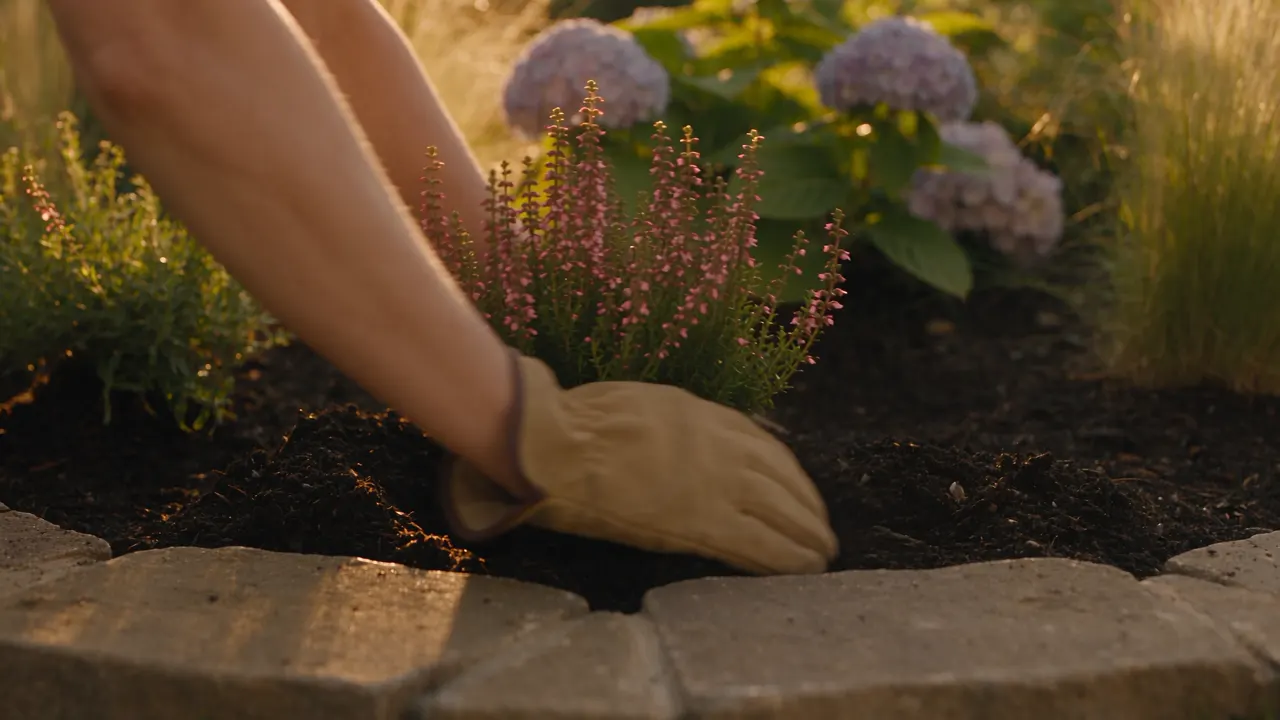 Replanting a mature garden
- Neighbourhoods
- Bells Corners, Lynwood Village, Westcliffe Estates, Centrepointe, Craig Henry, Crestview, Meadowlands, Manordale, Bayshore, Parkwood Hills
- Common ground
- Mature trees and roots, settled hardscape, shade, older drainage
- Popular projects
- Walkway and patio replacement, front-yard redesign, shade planting, tree replanting
- Before digging
- Tree permits around large trees, locates, careful root-zone work
A city that became a suburb
Nepean's story
Nepean Township dates back to 1792, and for most of its history it was farmland west and south of Ottawa. Suburban Nepean took shape in the 1950s and 1960s: Lynwood Village in Bells Corners went up in the late fifties and early sixties, Westcliffe Estates followed from 1969, and the township spread across farmland toward Centrepointe and, much later, Barrhaven. Its town hall moved from Westboro to Bells Corners in 1966. Nepean was incorporated as a city on November 24, 1978, and joined the amalgamated City of Ottawa in 2001.
This page covers Nepean's established neighbourhoods inside and around the Greenbelt. For the much newer suburb to the south, see the section on Barrhaven on the main page for landscaping in Ottawa.
Nepean, neighbourhood by neighbourhood
What the yards look like, and what they usually need.
Big trees, and building around them
Nepean's mature canopy is its best feature and the thing most easily damaged by a landscaping project.
Roots are wider than you think
A tree's roots spread far beyond its branches, mostly in the top 30 to 60 cm of soil, exactly where a patio base or a wall footing goes. Cutting a large share of them can kill a mature tree slowly, over several years, long after the crew has left. The City's guidance for working near trees is to keep construction at least 10 cm from the trunk for every centimetre of trunk diameter: a 50 cm maple gets a five-metre radius.
The by-law
On most urban lots in Ottawa, a private tree with a trunk 30 cm or more across, measured 1.3 m above the ground, is a distinctive tree. Removing it, or injuring it, including by cutting roots during construction, needs a City tree permit. City-owned trees on the boulevard are protected too. A design for a Nepean yard maps the protected trees first and fits the patio, walls and beds around their root zones.
Ways to build near a tree
There are good options. Patios can be moved, reshaped or raised on a base that sits on the soil rather than digging into it. Walkways can bridge roots. Hand digging and air excavation can expose roots so they are cut cleanly or avoided. And sometimes the right answer is a planted bed or a gravel sitting area under the tree instead of a hard surface.
Storms and the changing canopy
Nepean's trees have taken a beating. Ash made up about a quarter of Ottawa's trees before the emerald ash borer arrived in 2008, and most of them are gone. The September 2018 tornadoes tore through Arlington Woods and Craig Henry. The May 2022 derecho brought down trees across the city. And on July 1, 2026, the Canada Day storm hit Nepean harder than any other part of Ottawa: by July 10 the City had logged more than two thousand service requests in College ward alone.
Each loss is a chance to replant better: a mix of species so no single pest can strip a street again, trees placed far enough from the house and the sewer line, and grading and downspouts sorted out so the next big rain finds somewhere to go other than the basement. Rain gardens and permeable paving may qualify for Rain Ready Ottawa rebates where eligible.
Front yards worth coming home to
Many Nepean front yards still have the layout they were given fifty or sixty years ago: a straight concrete walk, a few steps, foundation shrubs that have grown into the windows and a lawn that struggles under the maple. A front-yard redesign is one of the most noticeable changes you can make to a house.
A new interlock or natural-stone walk can be wider and gently curved, with landing space at the door. Steps can be rebuilt in stone with consistent risers. Overgrown foundation plantings come out and are replaced with layered beds of shrubs, perennials and grasses that look good in every season and stay below the windows. Low path lights finish it.
Driveway changes where the drive meets the street fall under the City's new Access By-law, which limits driveways to half the lot frontage. Walkways and modest driveway extensions that meet the rules may not need a permit.
Shade gardens for mature lots
When the lawn gives up
Under a sixty-year-old maple, grass fights a losing battle for light and water. Overseeding with fine fescue buys time, but in the deepest shade a planted bed usually looks better and asks for less: hostas in every size, ferns, astilbe where it stays moist, coral bells for coloured foliage, wild ginger and Pennsylvania sedge as a soft groundcover. A stepping-stone path through the bed keeps it usable.
Hedges that thinned out
Cedar hedges planted when the house was new often go bare at the bottom as the canopy above them grows. Cedar does not regrow from old bare wood, so the options are to replant, to replace the hedge with a layered planting or a screen, or to open up the canopy so light reaches the base. Yew is a good evergreen alternative for shadier spots where drainage is decent.
Small yards in Bayshore and infill lots
Not every Nepean yard is large. Townhouses in Bayshore and infill homes on divided lots have compact back gardens where every square metre counts. A small yard benefits most from a plan: one well-sized patio instead of several fragments, planting in layers that draw the eye up, a single tree chosen for its mature size, and lighting that makes the space feel bigger after dark.
In small spaces, materials matter more, because everything is seen up close. A natural stone edge, a well-laid interlock pattern or a simple gravel area with stepping stones can make a courtyard feel considered rather than leftover.
Steps and split-level yards
Split-level houses and sloping lots are common in Nepean's mid-century neighbourhoods, and so are tired concrete steps that have shifted with sixty winters of frost. Rebuilding steps in natural stone or interlock on a compacted base, with every riser the same height, is one of the most practical upgrades a Nepean house can get. Where the yard falls away from the house, a low wall and a level terrace often turn a sloped, unusable lawn into the best room of the garden. Hardscaping covers how walls and steps are built.
Before you dig: your Ottawa checklist
Answer a few questions and get a checklist of the City and provincial steps that apply to your project, with links to the source.
Will the project involve any digging, even for a post or a tree?
Is there a tree with a trunk 30 cm or more across (about the width of a dinner plate) on your lot, or a City tree on the boulevard, within a few metres of the work?
Are you widening, moving or adding a driveway or walkway where it meets the street?
Are you hiring someone to build a patio, walkway, driveway, wall or steps?
Is there a retaining wall taller than about 1 metre, or a big change in grade?
Do you have water pooling in the yard, or downspouts emptying onto paving?
Is your home on a septic system or a well (common in the rural south and west)?
Your checklist
Questions people ask.
Can you build a patio near a big tree in Nepean?
Often yes, with care. The patio may need to move, change shape or use a base that avoids cutting major roots. If a protected tree could be injured, a City tree permit is needed. The root zone is mapped before the design is finished.
Which parts of Nepean do you serve?
All of Nepean, including Bells Corners, Lynwood Village, Westcliffe Estates, Centrepointe, Craig Henry, Crestview, Meadowlands, Manordale, Bayshore and Parkwood Hills. Barrhaven is covered on the main Ottawa page.
My old concrete walkway is cracked and sinking. Repair or replace?
Concrete walks that have cracked and settled usually cannot be repaired invisibly. Replacing the walk in interlock or natural stone on a proper base is the common choice, and it is a chance to make it wider and better shaped.
What should I plant where a tree came down?
Something chosen for the space and the light, from a different species than its neighbours. Small trees such as serviceberry or Japanese tree lilac suit tight spaces; hackberry, red maple or oak suit larger yards. Plant at the right depth and water deeply for the first two summers.
How do I stop water reaching my basement after big storms?
Start outside: grade that falls away from the house, downspouts discharged well away from the foundation, and paving that slopes away from the walls. Rain gardens and permeable paving help hold water on the lot. Inside, backwater valves and sump pumps are a plumbing question.
Is my cedar hedge worth saving?
If it is green to the ground, yes: shape it so the base gets light. If it is bare and brown at the bottom, cedar will not regrow there, and replanting or replacing it with a different screen is usually better.
More from Ottawa Landscaping Pros
See the whole process, from grading to lighting, on the main page for landscaping in Ottawa, where a backyard builds itself as you scroll. Or go straight to a service or an area.
Start with a conversation
Tell us about your yard
613-851-7831Call for the quickest answer, or send the form and you will get a call back to talk through the yard, the timing and what a site visit involves.